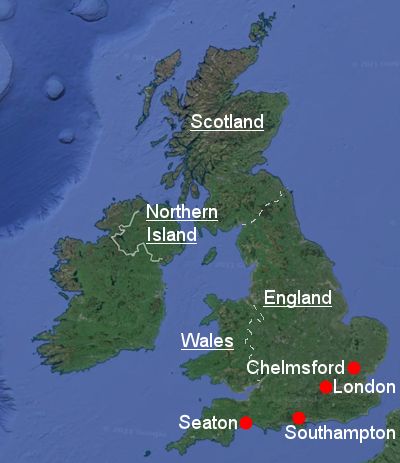
United Kingdon
 Size: 244,820 sqkm
Population: 60,610,000
Capital: London
Time Zone: GMT +0 to +1 (Summer)
Use the navigation bar on the left or the map-links to select a place. Alternatively scroll down to see all the entries. Click on photos to enlarge. See all UK photos here.
The United Kingdom is made up of four constituent countries: England, Wales, Scotland and Northern Ireland, the UK's full title is The United Kingdom of Great Britain and Northern Ireland; with Great Britain being made up of England, Wales and Scotland. These days the borders between the different countries are only marked by road signs, however the people of each country are still strongly patriotic and, for example, have separate international football teams (however we participate in the Olympics as a single entity).
As a child I grew up in the small town of Seaton, situated in the south west of the United Kingdom. The south west is a very green area of the UK, with lots of fields, rivers and woodland which providing many great opportunities for walking and biking. The climate is pleasant, and whilst rain is not uncommon, the summers can be dryer than the western coastal areas where wet air from the Atlantic causes higher rainfalls. Whilst of a relatively northern latitude, the Gulf Stream flows up from the tropics and keeps the sea temperatures warm, and so snow is rare on the south coast. Likewise in summer the sea keeps the land cool, with temperatures rarely staying in the 30 for more than a few days a year.
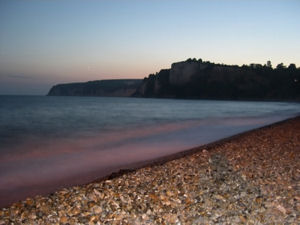
Seaton is in the centre of the Jurassic coast, a UNESCO world heritage site where 96 miles of cliffs span 180 million years of geographic history from the Triassic through the Jurassic and then into the Cretaceous. Seaton also boasts a rare salt water estuary which provides homes for many wetland animals and birds. Since the year 2000 many bird hides and walks have been created in this area to allow better access for visitors. Seaton also has a tram line dating back to 1966 and provides great views of the estuary and surrounding area.
Seaton
Southampton
London
Chelmsford
 After finishing my A-levels I moved to Southampton, also on the south coast, where I completed my masters degree and then doctoral studies in physics and optics. Southampton has a similar climate to Seaton, only being 70 miles further east, but is noticeably drier in summer. Whilst a fare sized city with an active port Southampton is not far from the New Forrest, which is a lovely span of heathland, and on the northern edge the city rapidly turns to woods and farms.
Southampton was bombed extensively in the war due to its strategic significance as a port, and then later rebuilt out of concrete. This does little for the architecture of the area, although in recent years there has been a drive to smarten the city up, and it is starting to look better than when I lived there.
After finishing my A-levels I moved to Southampton, also on the south coast, where I completed my masters degree and then doctoral studies in physics and optics. Southampton has a similar climate to Seaton, only being 70 miles further east, but is noticeably drier in summer. Whilst a fare sized city with an active port Southampton is not far from the New Forrest, which is a lovely span of heathland, and on the northern edge the city rapidly turns to woods and farms.
Southampton was bombed extensively in the war due to its strategic significance as a port, and then later rebuilt out of concrete. This does little for the architecture of the area, although in recent years there has been a drive to smarten the city up, and it is starting to look better than when I lived there.
The physics department at the University is very active and this coupled with the Optics Research Centre, which is one of the premier optics institutions in the world, has led to a many spin out companies, primarily focused on optics. This environment was possibly why I chose to study optics and certainly the contact I had with many smart and motivated people from this field has shaped my future development.
In 2006 I embarked on a world trip and then moving to Japan for 2 years followed by a further 2 years in Australia. However after this I moved back to the UK and this time to London.
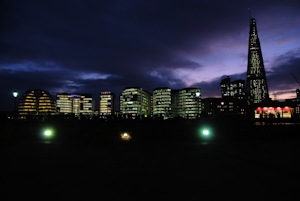 The UK is a very multicultural nation due to the long history of trade and the relatively high standard of living. London epitomises this, and is one of the most vibrant and diverse cities I know. The architecture and history of London are amazing and coupled with free world class museums and a large selection of great food makes it a fine place to live. For several years I have lived in the Putney, in the south west of London. Putney is famous for being the start point of the Boat Race - a yearly rowing contest between the universities of Oxford and Cambridge - but has more of an out-of-city feel and is only a short jog from Wimbledon Common and Richmond Park, both lovely expanses of parkland.
There are no true mountains in the UK but large parts of Northern England and much of Scotland and Wales are filled with large hills and much of these areas are dedicated national parks, providing large areas of semi wilderness for walking and other activities. Of these my favourites are the Lake District and Snowdonia, and closer to home Dartmoor is a great place for a hiking, cycling and climbing.